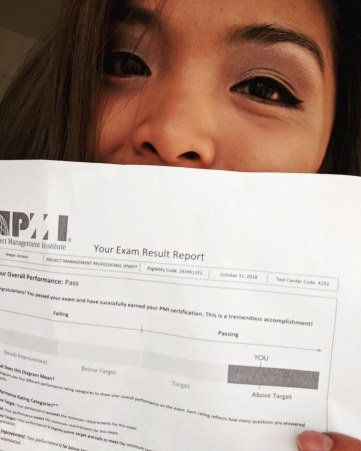
In the last two months since I passed the PMP Exam, I had a number of folks have ask me questions regarding studying – how I did it, for how long, and what resources I used. This blog post is half-FAQ, half-review, and more tips on taking the Exam.
Note: The links below are for your reference only. I don’t make any money off them (mainly because I haven’t figured out how to do affiliation links 🙂 )
How long did I study for?
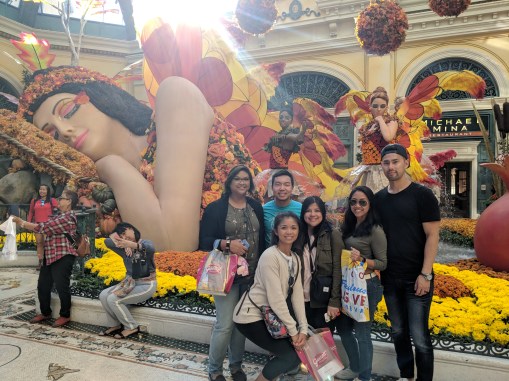
I was clocking in around 2.5-4 hours a day, and longer on weekends. I did it for 10.5 weeks. This timing is all-inclusive – filling out the application, taking tests, reading books, creating index cards, watching podcasts, etc. While time needs to be carved out for studying, don’t forget to give yourself downtime too – go the gym, meditate, have lunch with friends…I actually went to Las Vegas at the end of Week 9. The key is to be disciplined and prioritize your time wisely!
Lesson Learned: Downtime is key to reinforce what you learned into long-term memory…and to keep you sane.
How long did it take you to take the actual exam?
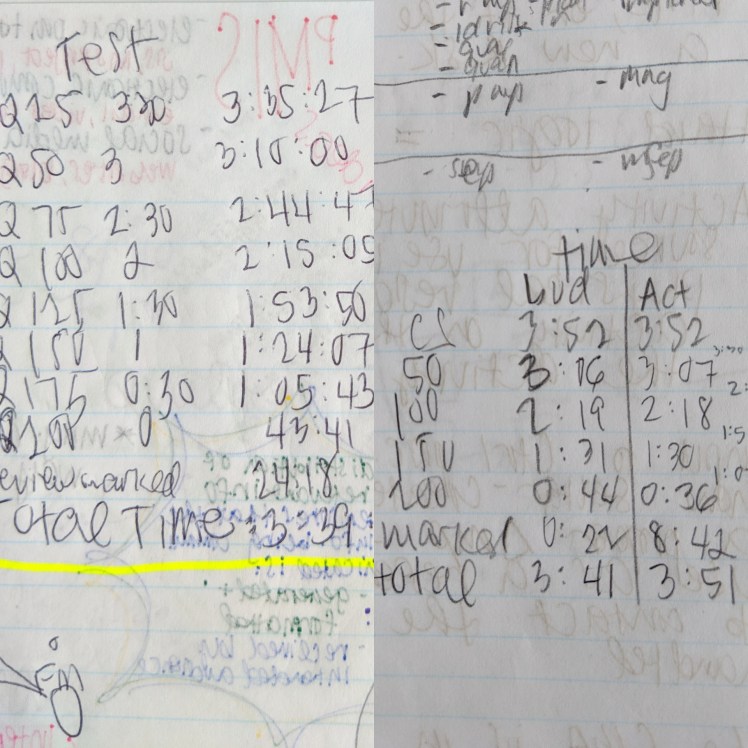
I had 11 minutes left before I clicked “submit”. Every Saturday starting Week 4 or 5, I took the test in long-form – timed, with each subsequent test increasingly emulating the real test (i.e. I took a lot of bathroom breaks, got up and stretched, and ate in the first few full exams; in the later exams, maybe 2 bathroom breaks, and didn’t eat). I scribbled down notes on when I hit a particular question, so I know if I need to speed up or slow down. I took my Exam simulator #1 while I had the US Open 2018 Women’s Match between Naomi Osaka and Serena Williams on TV….since the match was so dramatic, I had failed the exam miserably!!!
Lesson Learned: Always be mindful of the time when taking the exam. Take full, timed exam simulations. Never multi-task while you’re taking an exam.
Products I used in my Study Sessions
I used several books, a podcast, an exam simulator, and “old-school” index cards and taking notes. I will describe each in detail below.
- PMBOK, 6th Edition + Agile Practice Guide. I purchased mine on the PMI Website, and it comes bundled with the Agile Practice Guide. As dry of a material as it is, you must read the PMBOK Guide front to back at least once, underlining important points. Then you only read the underlined materials in a second reading. Read through the Agile P.G. at least once before the test.
- PMP: Project Management Professional Study Guide, 9th Edition, by Kim Heldman. Unlike the PMBOK, this book provides a bit more context and real-world application. It comes with access to the Wiley Online Study Prep Center; the registration of which I though was clunky. The practice questions at the end of every chapter (as well as the Online Study Prep Center) were quite challenging. I thought the questions were really challenging, and the exam simulation is not at all like the real experience. I liked the book, but not the Online Study Prep Center.
-
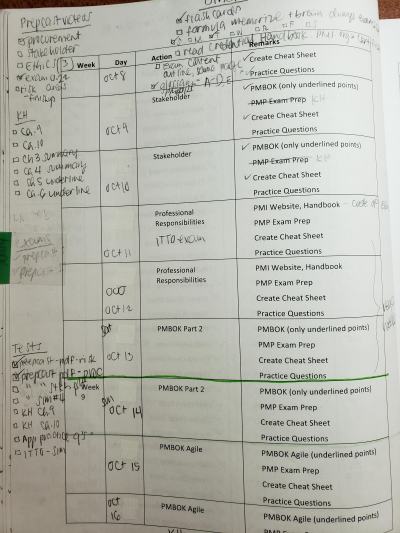
PMP Exam Prep Guide – Outwitting The PMP Exam: Apply 100s Of Tips, Tricks And Strategies. Don’t Be Among The 55% Who Fail On Their First Attempt, by Asif Chorwadwala. This book is a quick read about the exam itself. The most useful chapter for me was the Study Plan Schedule. This is where I got the “4 hours, 11 weeks” idea. With some ‘tailoring’ (a concept in the PMBOK!), I was able to craft a Study Plan to fit into 10.5 weeks of studying. The rest of the book had good tidbits here and there, but overall poorly written.
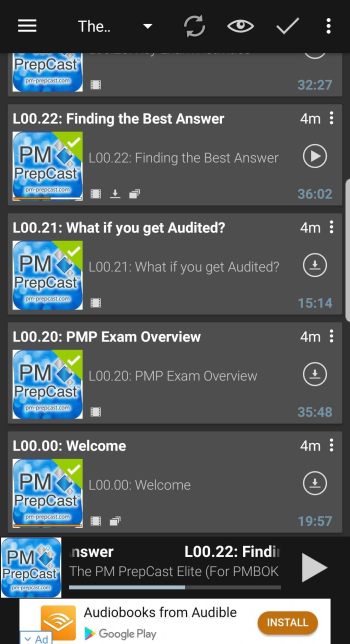
- PM Prepcast, Cornelius Fletcher. This was my favorite product. I think you can only read so much, that to reinforce the learning, some things would need to be visual or auditory. The podcasts allowed me to listen to the concepts while doing mundane or physical tasks – I would have the podcast on while in the shower, getting ready for work, cooking prep, and working out in the gym*. Best of all, as it is a podcast, you can take it with you wherever you go, and can even download the content to your phone**. The website explains the various packages/product benefits; I purchased the Elite Package. Highly recommended!
*I know I said not to multi-task earlier – to reiterate you shouldn’t multi-task for an exam simulation….studying is different. This may not be for everyone, but I found that mundane or physical-related activities can be paired well with thinking tasks. I mean, if you’re on a treadmill for 20 minutes, you can surely listen along to a podcast and mull over Fletcher’s content. To each her own.
**In my defense for the Vegas trip, I watched a few PM Prepcasts on the plane to and from.
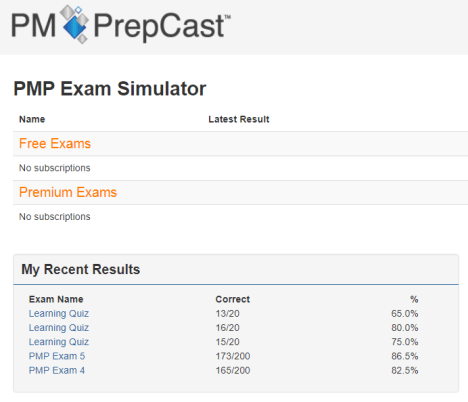
- PMP Exam Simulator. One of the products from the PM Prepcast is the PMP Exam Simulator. This specific product deserves its own recognition, as I believe it had a significant impact on my success. It comes with 8 Full Exams, and you can take it timed or un-timed. The Exam Simulator is only available to you for a limited number of time – 90 day expiration from the day you first access the portal. What I loved about this product is that the questions resembled the real exam, that wrong/right choices are subsequently explained in full detail, and it gave you a breakdown of what areas you were weak on. Highly recommended!
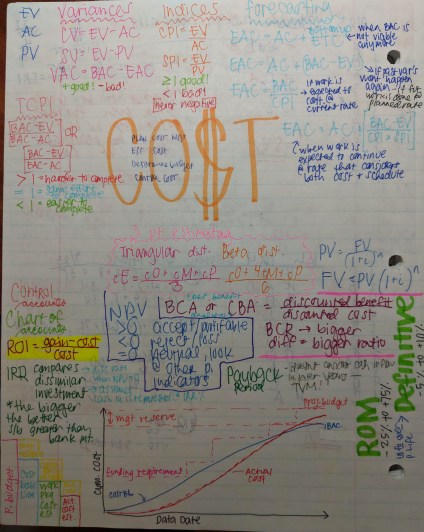
- Notebook, flowcharts. I found that taking notes helped me retain, visually and in my own words, the PMP materials. One of the tips I heard somewhere was to jot down notes, but to limit it to one page per Knowledge Area, so you had to give it a bit of thought as to what is truly important and what’s not. See below – I like my colors and my pens and my visuals 🙂 Also, drawing out a flowchart helped me make the connections between the various knowledge areas. In my 7 days before the Exam, I had some difficulty piecing together the various K.A.’s – I drew out my own flowchart but it wasn’t making sense to me. I found a video on YouTube that showed me the varying flows – I watched, but I also drew it out to help me understand.
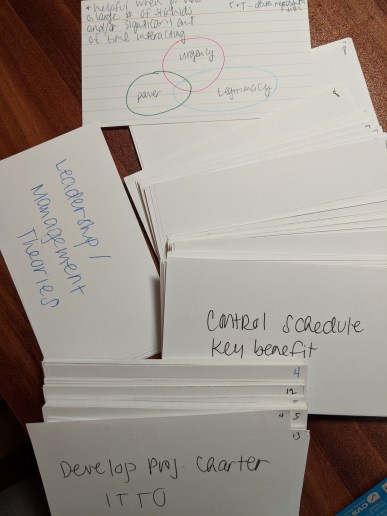
- Index cards. Again, old-fashioned, but effective. Every time I got a question wrong, or I didn’t quite understand a definition or a concept, I’d jot it down on a 3×5. I flipped through them when I need a quick study/refresher. I had a pack of 240 index cards, and up through Week 10 I was still writing out new ones (yes, I did end up using the entire pack).
- ExamMobile: PMP (Link is to the Google Play Store). This particular resource I used around Week 7 through the Exam Day. I believe you get around 500 questions for a fee of $10. Great for on-the-go and quick quizzing. Each question comes with an explanation as to why an answer is correct. This one is a hit-or-miss; there are some good questions, and some bad ones. The app was convenient. I wanted different flavors of questions so that I was prepared for anything that came my way, but in retrospect, I probably didn’t need this app. It might be helpful for you.
Anything Else That Could Give Me a Leg Up?
There’s no easy way around this. You have to get your hands dirty, put your rear in gear and study!!! But, here are some miscellaneous tips/advice that I followed that I found effective (and maybe not so):
- Going to your test center sometime before the exam. I visited mine a week before the exam, and it turns out that there was construction on the exterior, and I had to come around the building to figure out the alternate entrance! This would have thrown me off my chi the day-of! I’m so glad I did this.
- Ensure your application name matches the name provided to Prometric. I’ve heard horror stories via forums that if your name doesn’t match the government ID, that you would get rejected. Having the standard Filipino long name, all my ID’s don’t match 100%, so I was sweating bricks checking into Prometric. In hindsight, I should have just called (or even entered the premises when I commuted to the location beforehand to ask about the ID).
- Changing up study locations every once in a while. By doing this, you don’t get bored and introduce some variety in your study sessions. I had a desk at home, our apartment’s common quiet area, and sat at the NY Public Library in Bryant Park once 🙂
- Study Group/Forums. I actually didn’t do this but it might work for you, if you’re the type of person. I perused the PM Prepcast Forum maybe 5 times at most, and I made a posting about Time Management. I’m not a great contributor to these things, and it would have just been another thing for me to read, so I skipped these.
- Don’t expect to have everything. I think this is my biggest realization in those 10.5 weeks of studying. You WILL lose sleep. You won’t have time for the gym. You’re social life should be limited. You might not have as much time with your husband as you would normally do. Giving up 4-hours daily, and more on weekends, require a great deal of sacrifice. Depending on your priorities, some aspect of your life needs to take a backseat, because studying for the PMP is not easy. For me, I decreased my gym time and social life.
Best of Luck!
Believe in yourself, be disciplined, and all else will fall into place.
#PMP #ProjectManagement #career
 MeganSoriano.com